Why change in Iran could be led by its minorities
The list of the Islamic Republic’s disenfranchised is long and getting longer. History shows that this is where the regime’s opposition is likely to be at its most potent.

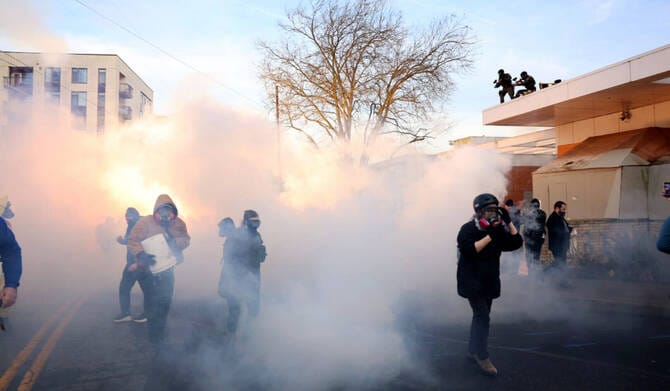
Triggered by the Tehran killing in custody of a young Kurdish-Iranian woman by the Morality Police, the huge resulting protests and civil unrest that swept across Iran in 2022-23 were notably led by women and minority ethnic groups.
Across the Islamic Republic, minorities have led the charge when it comes to expressing a desire for change, disenfranchised groups having stood out as the most active social forces able to mobilise, resist, and exert sustained pressure on the regime.
Their willingness to protest should come as no surprise. Non-Persian ethnic groups in Iran have long suffered oppression. For the Arab Ahwazi people in the south, who constitute up to 2% of Iran’s population, this is compounded by racial discrimination. They are often at the vanguard of resistance.
Sometimes, this resistance uses violence. One such armed group is the Arab Struggle Movement for the Liberation of Ahwaz (ASMLA), based in the country’s south. It is comprised of Arab nationalist and separatist insurgents advocating secession from Iran, with leaders based in Europe.
Iran’s Arab Ahwazis
Over the past two decades, the Ahwazis have led countless protests and uprisings, drawing on a legacy of activism that saw them play a crucial role in the downfall of the Shah’s regime through mass strikes in the oil sector and other critical industries. Today, they remain a driving force in Iran’s ongoing struggle for justice and reform.
A century ago, the ‘Kingdom of Arabistan’ fell and Prince Khazal was overthrown by occupying Persian forces in 1925. The regime of Shah Reza Pahlavi soon set out to erase the region’s Arab identity, changing the name ‘Arabistan’ to ‘Khuzestan’ and banning the use of Arabic (which had been the region’s official language), replacing it with Persian as part of a broader assimilation policy.
Alongside such cultural and political measures, the Arab Ahwazi people also suffered several massacres, including in 1925, when Pahlavi’s forces killed 700 Ahwazi Arabs in the city of Khorramshahr, as documented in the memoirs of Mehrmah Khanum Ismat al-Saltaneh, the nephew of Shah Nasser al-Din Qajar. Again, in 1928, a peasant revolt across the region’s villages led to the Shah’s forces killing 100 Ahwazi Arabs.
Pull Quote: Willingness to protest should come as no surprise. Non-Persian ethnic groups in Iran have long suffered oppression
A later revolt led by Haidar al-Talil, commander of the Battle of Alwani in the Minas region, led to 80 Arabs Ahwazis being killed. On 30 May 1979, the Islamic Republic’s military and militias attacked peaceful Arab demonstrators in the city of Muhammara, killing 200 Ahwazis and injuring 500, as reported by the Tehran-based newspaper Payam-e Emrooz.
In 2005, Iranian security forces killed more than 50 Arab protesters in the city of Ahvaz during a demonstration against government plans to alter the region’s demographic composition in favour of non-Arabs. This attack was documented in a Human Rights Watch report, later cited by the US State Department.
On 30 March 2020, as most of the world entered lockdowns during the pandemic, 35 Ahwazi political prisoners were killed in two separate prisons after protesting a lack of health protection measures from Covid-19. A fire later broke out in Sheiban Prison, killing another 80 Ahwazi prisoners there.
These incidents form part of an historic pattern, with countless other killings, but official statistics are hard to come by. Hundreds more Ahwazi prisoners—including poets, intellectuals, and activists—remain detained in dire conditions, with Sheiban Prison (also called Ahvaz Central Prison) among the country’s most notorious.
Outside Iran, Ahwazi activists and leaders are targeted by Iranian security forces. Mansour Silawi was killed in London in 2008, and Ahmad Mola al-Nisi was killed in the Netherlands in 2017.
Tyranny of the majority
Khuzestan, of which the capital city is Ahvaz, is one of Iran’s main oil-producing regions and therefore one of its wealthiest, yet it has the lowest educational attainment levels of Iran’s 31 provinces. In part, this is because Arab children are not taught in their native language at school. Their unique culture, language, and arts are effectively suppressed.
Furthermore, the region’s oil industry has led to significant environmental damage, with water resources being funnelled to Tehran and other big cities. Diverting Khuzestan’s rivers to the Iranian interior has had a huge impact on local agriculture, destroying livelihoods, driving a wave of internal migration, and forcing assimilation.
Particularly devastating was the authorities’ decision to drain the Hawizeh Marshes, displacing residents from 118 villages into overcrowded city slums. Fed by the Tigris and the Euphrates, the Marshes have been populated for 5,000 years. Yet this was no isolated incident.
Authorities also confiscated hundreds of hectares of fertile agricultural land along the Karun River, displacing local villagers and farmers. Where productive farms once stood, 16 agro-industrial companies quickly established factories, employing a predominantly imported workforce.
The damage to the region’s soil has led to frequent sandstorms and across the region there is an increase in cancer, respiratory diseases, and childhood illnesses. Yet all this is little noticed—the Ahwazis are a thorn in Tehran’s side. The Arabic identity of more than 200 cities, towns, villages, and landmarks have been changed to Persian names in recent years. Even babies’ names must be Persian before they can be registered.
Apathy and opposition
Both Khomeini (who died in 1989) and his successor, the current Supreme Leader Ali Khamenei, fought rising hostility of Iranians towards the theocracy of the Islamic Republic. This led to vicious crackdowns against dissent and protest, most recently against the uprisings of 2017-18, 2019-20, and 2022. The uprising of 2019-20 led to an estimated 1,500 protesters being killed by Iranian police, according to Reuters.
In March 2024, Iranians felt so disenfranchised that only 41% voted in parliamentary elections. This continued a trend: in 2020, less than half the eligible voters cast their ballot in the presidential election. These may even be generous figures. Some opposition groups claim that the true 2024 voter turnout was closer to 27%.
Pull Quote: Both Khomeini and Khamenei fought rising hostility towards the theocracy, including with vicious crackdowns against dissent and protest
If elections are seen as referenda, they appear to confirm the regime’s growing illegitimacy, which suggests that future uprisings and revolts are likely. That will worry the authorities, given that the sustained 2022 protests shook the regime to its core.
Yet political opposition in Iran is weak, having been targeted by the regime, including through covert penetration, infiltration, and surveillance. In this vacuum, protest movements come and go, rapidly forming then swiftly collapsing. The so-called ‘Mahsa’ coalition being among the more notable.
Between the Revolutionary Guards, the Basij (a paramilitary volunteer militia), and state security and intelligence agencies, the regime has effectively paralysed Iran’s political opposition, which has led to an over-reliance on spontaneous demonstrations, in place of any sustained and organised actions, such as continuous strikes.
Inter-ethnic tensions
Iranian security agencies are also known to exacerbate inter-ethnic tensions. While around 60% of Iranian’s are Persians, Kurds comprise roughly 10% of the population, while Turkic peoples, including Azerbaijanis, comprise up to 20%. The latter were reluctant to protest in 2022, unlike the Balochs, an ethnic group with a substantial presence in south-east Iran.
The differences in approach to protest movements can mirror the tensions (and occasional conflicts) between Iran’s different ethnic groups, with Iranian Azeris and Iranian Kurds notably hostile towards one another. The overarching goals of protest movements have never been enough to put old grievances entirely to bed.
Iranian Arabs have as much reason to fear repercussions from the authorities as anyone, since reports of rife of anti-regime Arab families losing their businesses, jobs, and housing. Yet even Persian Iranians have a history of political division, factionalism, and confrontation, not least between supporters of the monarchy—led by the exiled son of the deposed Shah, Reza Pahlavi—and republicans.
It was notable that the Mahsa coalition brought together Pahlavi, a Kurdish party leader, celebrities, and several prominent civil rights activists. Such coalitions and their supporters remain a minority—the regime still has the backing of large portions of Iran’s population—but ethnicities in Iran could easily be its rulers’ Achilles heel.
__
By: Yousef Azizi Banitorof
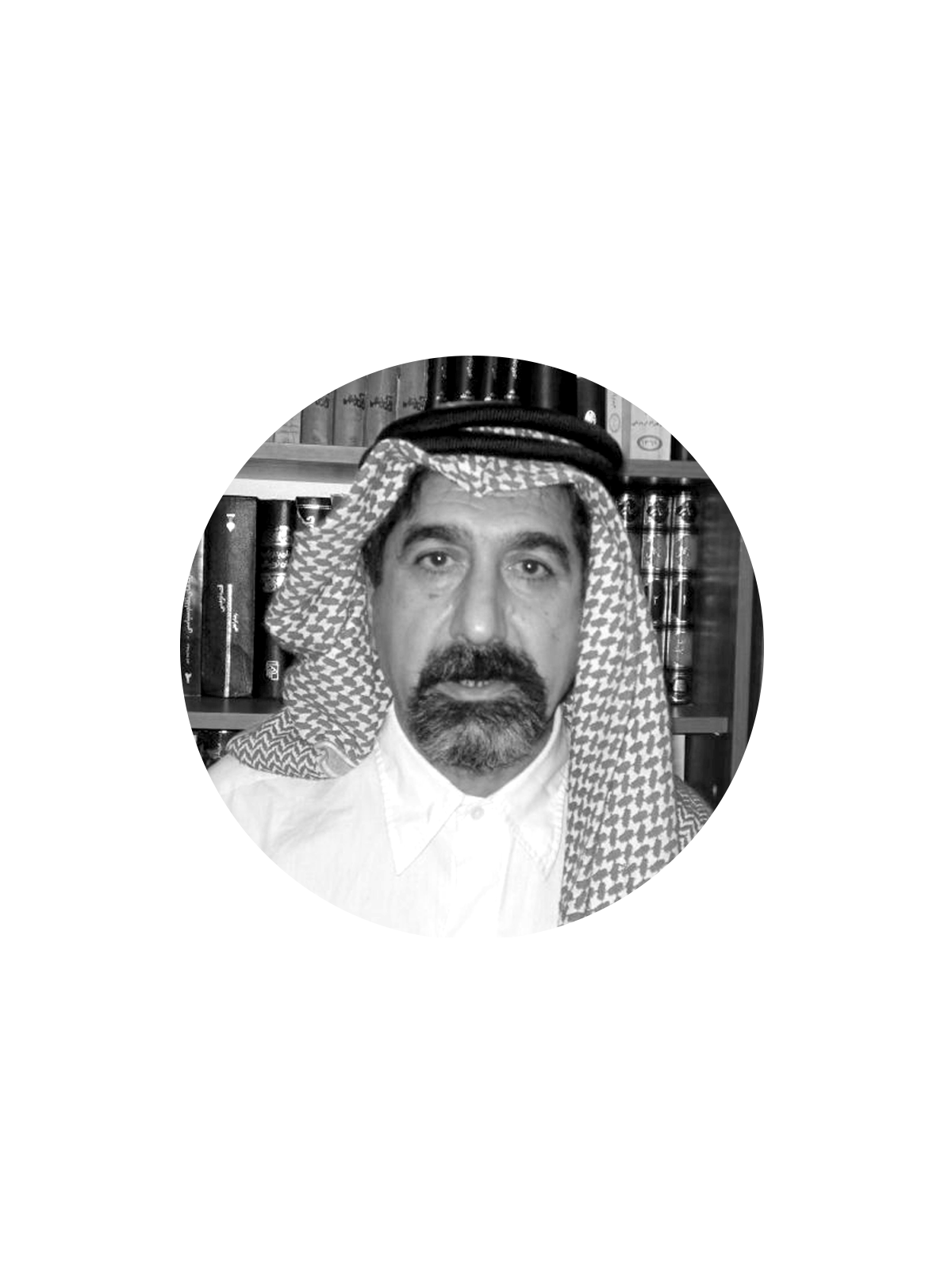
*Yousef Azizi Banitorof is an Ahwazi author, researcher, and Secretary of the Centre for Combating Racism and Discrimination Against Arabs in Iran
*