Turning the volume up: US airstrikes in Yemen are part of a bigger picture
With negotiations with Houthi sponsor Iran ongoing, US President Donald Trump authorised the bombing of the Houthis for several reasons, only one of which was their attacks on Western shipping.


US foreign policy towards Yemen is driven by a combination of political and security interests. Although counterterrorism is a primary interest, its action in Yemen is also aimed at bolstering regional alliances, upholding stability and security in the Gulf, protecting allies, and ensuring the uninterrupted flow of maritime traffic through critical waterways such as the Arabian Sea and the Bab al-Mandab Strait.
The US-Yemen relationship has been through several stages, each defined by the era and leaders in power at the time. Foreign policy adapts in response to changing regional and international conditions, yet the US administration’s interpretation of strategic interests and domestic implications also plays a role in shaping decisions.
The second Trump administration, beginning in January 2025, could yet be one of the more notable, with more than 1,000 US airstrikes having been conducted over Yemen between mid-March and the end of April. More than 100 people were killed in these, according to the Iran-backed Houthi militia, which American bombs were targeting.
Yemen’s infrastructure was already under strain before March. Since 2014, the country has been torn apart by fighting between the Houthis—a Zaydi Shi’ite Islamist movement that emerged in the 1990s—and forces fighting for the internationally recognised government, whose leaders have been forced into exile.
The Houthis, an ancient tribe based in the Marran Mountains in Yemen’s north-west region, has occupied much of Yemen since 2015, including the capital. They began attacking Western shipping in the Red Sea in declared support of the Palestinians in the Gaza Strip at the end of 2023, which in turn prompted a US-led international coalition to launch retaliatory attacks on Houthi sites from January 2024.
Recent bombing
In March 2025, Trump authorised US airstrikes against Houthi positions, targeting radars, air defences, missile systems, and drone facilities. It came after US envoys and others failed to negotiate an end to the attacks on Western ships and on Israel. Two months earlier, Trump redesignated the Houthis as a Foreign Terrorist Organisation (FTO), which took effect on 3 March 2025.
All assets linked to the Houthis were frozen, financial transactions were prohibited, and sanctions were imposed. Any country or entity that provides support to the Houthis is now also sanctioned, with several prominent Houthi leaders—including those involved in political negotiations—designated as terrorists, limiting their ability to move freely between regional capitals.
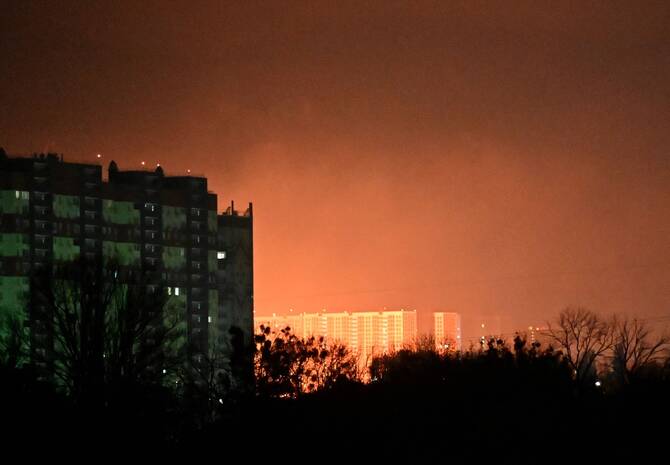
The recent US bombing was designed to target the Houthis’ communication, weaponry, and leadership, with intelligence-led bombing of Houthi gatherings in contested zones on the outskirts of Marib and Al-Bayda. Additionally, several Yemeni ports under Houthi control—notably Ras Issa Port—were destroyed, disrupting the group’s supply lines and maritime capabilities.
The US airstrikes inflicted substantial damage inflicted on Houthi storage sites, leadership headquarters, and missile launch locations in strongholds such as Saada, Hodeidah, Sana’a, and other key regions. Unverified reports suggest that several senior Houthi leaders were killed in the bombing, with up to 40 aerial sorties conducted daily.
In early May 2025, Trump declared an end to the American airstrikes, saying the Houthis had capitulated. Yet in the weeks since, they have continued firing missiles at Israel, including one that landed near Ben-Gurion International Airport. To understand what may come next, it is important to understand the history and the factors that might determine any new US approach to the country.
Iranian influence
For Trump, the Houthis are part of a bigger picture—that of Iranian influence in the region, wielded through armed groups that act as Iranian proxies. The Houthis, Hezbollah, Hamas, and the Iraq-based Popular Mobilisation Forces (PMF) would all come under that umbrella, in what was previously called the ‘Axis of Resistance’.
During his presidential election campaign, Trump was hawkish on Iran, leaving all options on the table to prevent it from obtaining a nuclear weapon. He also announced his intention to label the Houthis as a foreign terrorist organisation (FTO).
Pull Quote: In early May 2025, Trump declared an end to the American airstrikes, saying the Houthis had capitulated. Yet in the weeks since, they have continued firing missiles at Israel
Washington appears to see Yemen as part of its broader, more comprehensive regional security strategy, one that also addresses the ongoing war in Gaza. For Iran, the Houthis offer the chance to extend influence, but the militia remains internationally isolated and increasingly unpopular among Yemen’s people, who are suffering from a deep economic and humanitarian crisis. Faced with criticism, the Houthis chose to ‘fight’ for Gaza, aligning with the Yemeni population’s sympathies.
The Houthis are not a movement that is deeply rooted in the fabric of Yemeni society. On the contrary, they constitute a relatively small faction—at best numbering around 300,000—among a population of more than 20 million. At its core, the Houthis are a sectarian Shi’ite group with minimal popularity or legitimacy, whose control has come not through support but through coercion.
Although the Houthis ostensibly make independent decisions, few doubt that their actions in the aftermath of 7 October 2023 followed Iranian directives, using their Iranian-supplied weapons in a strategic waterway. Yet Iran has also been running out of proxy options, given the weakening of Hezbollah in Lebanon.
The rugged terrain of the Houthis’ area of control in Yemen, their ability to exert influence over international shipping routes, and the 2,000km distance from Israel have all been cited as factors in the Houthis’ favour.
US considerations
Washington wants to protect and reassure its regional allies, and part of this involves projecting power once more. For Trump, there is an element of undoing what he sees as the mistakes of his predecessor, Joe Biden, who in early 2021 withdrew US support from the Saudi-led coalition and removed the Houthis’ designation as a terrorist group.
The US is also aware of its long-term rivals in the region, with China’s role having noticeably expanded. For instance, it was China—not the US—that mediated the Saudi-Iran thaw in 2023, something that raised several diplomatic eyebrows. The current US administration wants reclaim its global leadership role and has been reinforcing alliances with longstanding partners in defence and trade.
In March 2025, Washington asked for Saudi involvement in its bombing of Houthi sites, but the appeal was politely declined. Since 2015, Riyadh and Abu Dhabi launched around 25,000 airstrikes on the Houthis is Yemen, but the United Arab Emirates left the Saudi-led coalition in 2020. In 2022, the UN negotiated a truce. With a few exceptions, it has largely held, and Saudi Arabia has been careful to avoid jeopardising it.
A major factor in the Saudi-Houthi de-escalation was a thaw in relations between bitter regional rivals Saudi Arabia and Iran in March 2023. Peace talks between the Saudis and the Houthis began in April 2024, mediated by Oman (which discreetly hosts several senior Houthi figures). An official Houthi delegation visited Riyadh in September 2024.
Message to Tehran
Washington’s airstrikes in Yemen can in part be interpreted as a message to Tehran. This signalling has been further reinforced by the repositioning of US military forces across the region and conducting conspicuous military exercises near Iran’s borders.
Trump has said he “will hold Iran responsible for any attack launched by the Houthi group”. The White House later reinforced this position, saying: “Any future Houthi attack will be considered a direct act by Iran. America will hold you fully accountable, and we will not respond softly.” The aim is to convince Iran that the cost of backing the Houthis in Yemen now overwhelmingly outweighs any strategic gains that could result.
Pull Quote: At its core, the Houthis are a sectarian Shi’ite group with minimal popularity or legitimacy, whose control has come not through support but through coercion
Despite recently held US-Iran bilateral negotiations in Muscat and Rome, the possibility of a full-scale war between the US and Iran remains, particularly if negotiations fail and threats to US interests increase. Such an outcome would affect the whole region, including Yemen. It would threaten global oil supplies and critical trade routes, especially if it led to conflict in Iraq and elsewhere.
Yet it is increasingly clear that the Yemen—especially the Houthi threat in the Red Sea—has been part of the US-Iran talks, meaning that any US-Iranian rapprochement could involve understandings regarding the Houthis. In short, Iran could use the Houthis as a bargaining chip, either offering to withdraw support in exchange for sanctions relief, for instance, or deploying them to achieve leverage in negotiations.
If Tehran were to relinquish its support for the Houthis, this would represent the further diminishment of its regional influence, given the loss of a key ally in Syria, and given the damage that Israeli actions have caused to the likes of Hezbollah and Hamas. Yet support for the Houthis may be the cost of a deal, given that Trump is serious about reaching an agreement with Iran. There is strong international support for these negotiations, with Israel the lone exception.
Possible options
Trump would prefer that his priorities to be met through a deal, given that to fully dismantle the Houthi apparatus, a ground-based operation would be needed—one by Yemeni forces, subtly backed by US and international partners. The US has no appetite for any direct ground involvement, but may opt instead to provide intelligence and technical assistance to Yemeni forces.
There is an outside chance that continued airstrikes could lead to the eventual collapse of the Houthi movement without necessitating a ground operation, but the odds are slim, since it would require the simultaneous cessation of Houthi supplies, which come through well-established smuggling routes.
If both the economic blockade and the airstrikes continue, the group may disintegrate, allowing the Yemeni people to reclaim control over their country. There are reasons to suspect this is possible—the Houthis’ military prowess has long been significantly overstated. Indeed, they came perilously close to losing key regions in recent years, before regrouping at crucial moments.
A well-prepared Yemeni force—such as the Joint Forces, the National Army, and troops loyal to the legitimate government—would need to be ready to engage in ground combat at the point of a coordinated naval and aerial blockade (preventing smuggling operations), but there is a lack of international support for such a campaign, not least for fear of exacerbating Yemen’s already dire humanitarian crisis.
Pull Quote: If Tehran were to relinquish its support for the Houthis, this would represent the further diminishment of its regional influence
It is not beyond the realms of possibility that a comprehensive political settlement in Yemen emerges as an outcome from the US-Iranian negotiations, one that would require the group to disarm before joining a power-sharing agreement. Supported by all key actors, including Iran, this could offer Yemen a way out of its decade-old conflict.
However, it is unlikely. The Houthis categorically refuse to disarm, and there are increasingly fractious divisions within the legitimate government’s ranks, meaning a lack of coherence in its negotiating stance. Any agreement that excludes the disarmament of Houthi militias does not provide for the exclusive control of arms by the Yemeni state, and is therefore not a path to peace, but rather a fragile truce. The danger is that such a deal grants the Houthis a veneer of international legitimacy, while retaining their the ability to launch future coups, destabilising Yemen yet again.
More of the same?
The more likely outcome is that the conflict settles into a familiar, uneasy, and deeply entrenched pattern of attrition, in which Yemen experiences neither peace nor war, and in which the US and Israel continue to conduct sporadic, targeted airstrikes. This would amount to the continuing echo of the past decade, a decision to manage the conflict rather than resolve it.
It would in essence be the maintenance of a precarious status-quo that minimally safeguards US interests in a frozen conflict, in which Yemen remains bitterly divided, with no full restoration of legitimate government authority and no outright concession to Houthi dominance. Amidst the enduring instability, there would be low-intensity warfare, diplomatic stalemates, and a worsening humanitarian crisis.
The status quo would drain the resources of the Yemeni people, exhaust the energies of its neighbours, and steadily exacerbate the already dire humanitarian and economic crisis, but if Trump feels that he can pragmatically safeguard American interests without getting entangled in a costly and prolonged conflict, he may opt not to uproot the Houthis. After all, he campaigned on promises no new wars in the Middle East.
Weighing potential gains versus potential losses, he may choose to limit his exposure to Yemen. Seen in this light, US airstrikes seem more like a tactical deterrent than a coherent, long-term strategy, letting Washington appear assertive without getting enmeshed. If no transformative internal shifts arise, or if the Yemeni crisis remains unlinked from broader regional upheavals requiring a comprehensive resolution, the country’s current situation could become the norm for years to come.
Regardless of the end scenario, whether that is military escalation, political settlement, or the perpetuation of the status quo, the US is still the pivotal actor whose actions (or lack of) are most likely to determine the fate of Yemen. A sustainable solution—one that restores sovereignty to Yemen and security to the region—depends overwhelmingly on whether the US chooses to act decisively, or whether it cautiously defers full commitment to avoid deeper entanglements.
__
By: Dr. Wesam Ba Sondowah

*Dr. Wesam Ba Sondowah is a professor of political science, an author, and an expert in human rights and international relations. She leads several women’s and development initiatives, including the National Coalition of Independent Women and the Arab Initiative for Education and Development. For nine years, she has participated in the sessions of the UN Human Rights Council in Geneva, contributing to reports and studies in Yemen and the Arab region, as well as on countering extremism, women’s empowerment, and religious discourse reform.
*