The State of South Yemen: Independence as a Pillar of Stability and Counter-Extremism

South Yemen stands today at a historic crossroads, similar in magnitude to the moment of its first independence in 1967. On 30 November 1967, the last British soldier left Aden, marking the proclamation of the Republic of South Arabia—later the People’s Republic of South Yemen—as a fully sovereign state. This milestone was the culmination of a long struggle against British colonial rule (1839–1967), during which the people of the South demonstrated their determination to reject domination and external tutelage.
For the first time in modern history, a republic emerged in the Arabian Peninsula under indigenous leadership, uniting more than twenty sultanates and sheikhdoms into a single national entity. Between 1967 and 1990, the Southern state built modern institutions in education, healthcare, and security, and consolidated a distinct Southern national identity.
However, these achievements were undermined by the 1990 unification with North Yemen, which quickly collapsed. In 1994, the Sana’a regime launched a full-scale war to impose control over the South. The fall of Aden on 7 July 1994 marked the destruction of the Southern state, the systematic looting of its resources, and the marginalization of its political and military elites—what Southerners describe as a second occupation, harsher than colonial rule. The war effectively killed the unity project and plunged the South into decades of political exclusion.
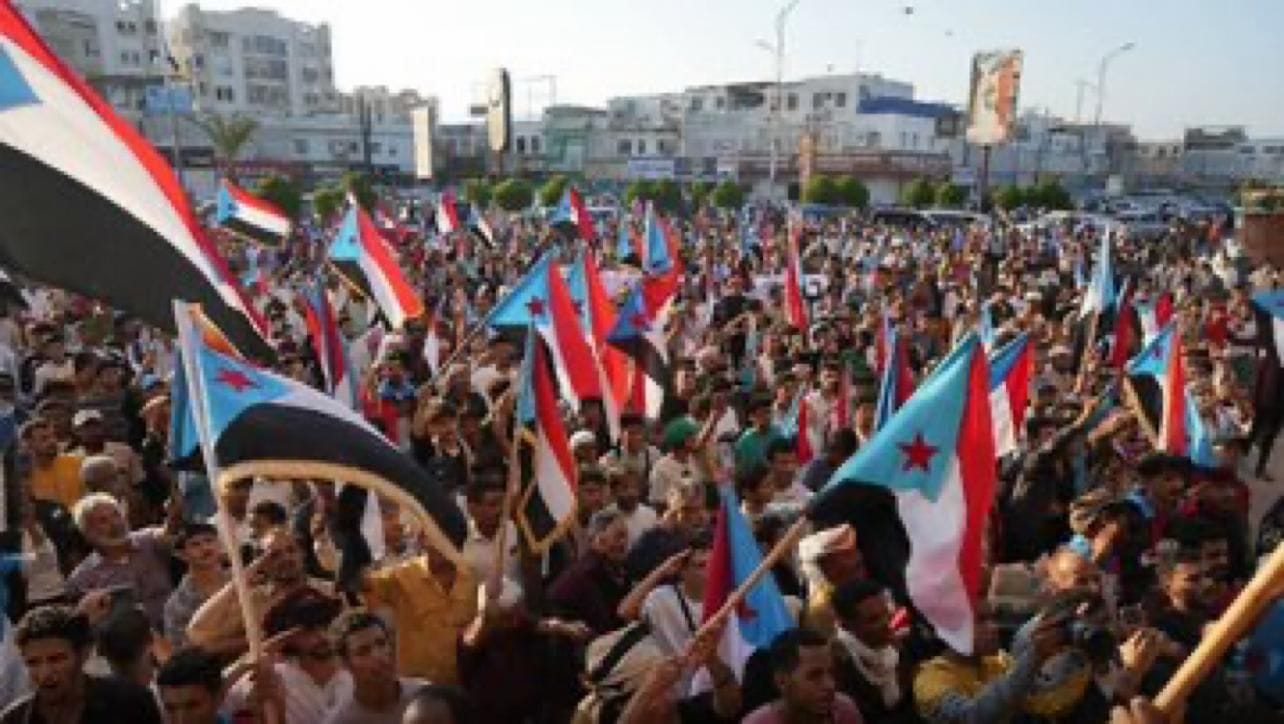
Out of this experience emerged a renewed Southern movement: first through peaceful mobilization starting in 2007, and later through armed resistance that culminated in the formation of the Southern Transitional Council (STC) in 2017. Today, restoring the Southern state is viewed as an inalienable right and a necessary step toward ending chronic instability and building a viable future. The liberation of Aden from Houthi control in 2015 marked a turning point, enabling the South to restore security and governance under Southern leadership.
Recent developments have also elevated Hadramout as a potential capital of the future Southern state. As the largest and most resource-rich governorate, Hadramout represents the South’s geopolitical and economic depth. Since the liberation of Mukalla from Al-Qaeda in 2016, Hadramout has become a model for effective counterterrorism and stability, supported by Southern forces and the Arab Coalition. Its role as a political center would ensure balanced development and decentralized governance, while Aden remains the historic and symbolic capital of the South.
Crucially, the Southern state project is inseparable from counter-extremism. Southern forces have been at the forefront of confronting both Al-Qaeda in the Arabian Peninsula (AQAP) and the Iran-backed Houthi militias. Operations such as “Siham Al-Sharq” in Abyan (December 2025) demonstrate the South’s capacity to dismantle terrorist networks and secure its territory. Southern forces have also played a decisive role in halting Houthi expansion since 2015, preventing Iranian influence from reaching the Arabian Sea and the Gulf of Aden.
At the same time, contradictions have emerged in Saudi Arabia’s position. While Riyadh officially supports Yemen’s unity, it has recognized the Southern issue through the Riyadh Agreement (2019) and acknowledged its legitimacy as a just cause. Yet Saudi opposition to unilateral Southern moves in late 2025, combined with direct negotiations with the Houthis since 2022, has fueled Southern concerns that their cause could be sidelined in a broader settlement.
Despite these complexities, Southern leaders argue that no durable solution in Yemen is possible without addressing the Southern question. An independent Southern state would not only reflect the will of its people, but also serve as a stabilizing force against extremism, a reliable regional partner, and a guardian of strategic maritime routes.
South Yemen’s second independence, if realized, would not be an act of fragmentation—but a step toward regional stability.