The roots of Libya’s crisis go deep but the world can help
The roots of Libya’s crisis go deep but the world can help


Since February 2011, Libya has faced a series of major obstacles to rebuilding its state institutions, achieving stability, and ensuring security. It currently has two governments: one based in Tripoli, and one based in the country’s east.
After a popular uprising finally removed Muammar Gaddafi from power, there was a power vacuum and Libya became a battleground for various countries, each pursuing its own interests and strategic goals.
The United Nations has played a crucial role in addressing the crisis, with its envoys shuttling between states, but the ongoing conflict among Libyan factions remains a major issue, while foreign interference still presents a challenge.
Despite the success of the revolution, Libyans quickly realised that they had inherited the burden of a collapsed state, devoid of functioning institutions, operating in chaos and instability, with widespread and uncontrolled proliferation of weapons. Crime is rife, as many take advantage of the lack of state authority and order.
No state infrastructure
Libya has no unified state authority and a lack of genuine institutions to stabilise the country. Successive governments have tried and failed to unify the nation or achieve the political objectives that the revolution demanded.
Yet Libya never truly underwent a period of institutional development. Consequently, there was no constitution (until 2011), nor any political parties. Even its military was gradually replaced by ‘security battalions’, leadership of which is largely based on personal loyalties or family connections, rather than any formal criteria.
Neighbouring states like Tunisia or Egypt have an army, a parliament, and some essential elements of political life such as parties, civil society organisations, and human rights frameworks. Libya lacks all of these. It is entirely unfamiliar with democracy.
In his book Libya: The Revolution and the Challenges of State-Building, Youssef Mohammed Al-Sawani argues that one of the greatest obstacles to building democracy in any country is the lasting impact of conflict or war on the transition process, and Libya is no exception.
Pull Quote: Libya never truly underwent a period of institutional development. There was no constitution, nor any political parties. Even its military has been gradually replaced
When the February 2011 revolution was successful, there was a strong desire for broad political participation and elections. A constitution was written, Article 1 of which begins with the words: “Libya shall be an independent democratic state in which the people shall be the source of all powers.”
But this desire for participation and democracy has gradually diminished and mistrust has grown. Elections were held, and the public initially participated with enthusiasm, but their choices were ultimately manipulated, breeding disillusionment. Alongside this, successive transitional governments have all failed to achieve their objectives.
Tribe first and foremost
Although technically a democracy, Libyan society remains overwhelmingly governed by a tribal mindset—one that disproportionately glorifies the tribe and demands unwavering allegiance to it. Given the regional divisions that have intensified since 2011, tribalism has grown more influential, at the expense of functioning political parties.
Alongside allegiance to tribe, the ideological struggle between liberals and Islamists continues to exert an effect, shaping Libya’s political landscape. Yet the political process in Libya remains markedly immature, and a comprehensive national project aimed at building a political system capable of re-establishing and restructuring state institutions has yet to materialise.
This has led to a distorted politics, with parties sometimes with as few as ten members. Disagreements over the constitution persist, with political participation driven by a desire for money, power, and influence. Politicians squabble over quotas, privileges, and personal interests, rather than for national unity or the public good.
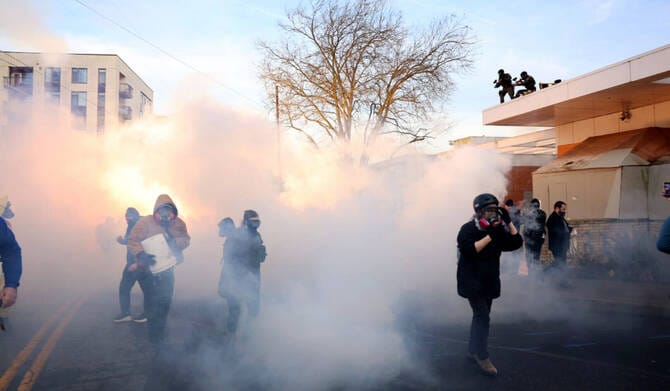
In the absence of a comprehensive reconciliation that could unite the population, these dynamics have led to a deteriorating security situation, as armed groups holding often conflicting loyalties seek to exert influence.
Foreign interference
One of the most striking features of the current Libyan political landscape is the overt interference by foreign powers, when states would previously have been highly reluctant to be seen to be engaged in the affairs of another state.
Their interference manifests primarily through the control and manipulation of Libya's political authorities, which then breeds a crisis of legitimacy crisis in these authorities.
As reported by Akhbar Libya 24, political analyst Idriss Ahmed said: “International interventions are not merely diplomatic initiatives, but rather part of a broader global struggle in which major powers compete for influence and interests in Libya.”
Libya has become a battleground for regional and international powers, undermining any prospects for independent, sovereign decision-making. This has had a knock-on effect economically. The decline of the Libyan oil sector, with erratic production levels, stems from Libya’s heavy dependence on a rentier economy. As a result, living standards have plummeted.
The country’s strategic location and rich natural resources have attracted foreign actors seeking to secure their own interests, including by backing local factions, according to Wolfram Lacher, author of The Fragmentation of Libya. This only intensifies tensions and contributes to the fragmentation of the nation.
International help
The United Nations Support Mission in Libya (UNSMIL) has increasingly become a key gateway to political power within the country. Through negotiations and meetings overseen by the mission and its various envoys, UNSMIL has played a pivotal role in shaping the political landscape amidst the ongoing crisis.
Libyan crisis is fundamentally a political crisis. Although it stretches back to the events of February 2011, it has become increasingly complex due to external interventions, which in turn are driven by competition over resources, the growing threats posed by terrorism and organised crime, and the issue of illegal immigration, with Libya having become a transit point for migrants and militants.
Pull Quote: One of the most striking features of the current Libyan political landscape is the overt interference by foreign powers
What next for Libya? There are still several potential scenarios. One is for the continuation of the status quo, which is made more likely, given that the Libyan crisis has gradually shifted down the international agenda, and since conflicting Libyan factions show no real commitment to finding a solution. Some analysts even suggest that current affairs seem to suit most parties.
Another scenario is secession and fragmentation, with growing public calls for a return to historical regional divisions increasing the likelihood of this. Under this scenario, the Libyan state would break apart. If it does, responsibility would fall squarely on the shoulders of local Libyan factions.
Solution lies within
The keys to resolving the crisis lie in Libya itself. Even if the solution is arrived at under the auspices of the United Nations, it must be Libyan-led. A comprehensive, inclusive national dialogue is needed, to salvage what remains of the country.
The conflicting parties in Libya must learn that the status quo, with foreign meddling, endangers Libya’s unity and territorial integrity. The emphasis should be on promoting the peaceful transfer of power, upholding public freedoms, ensuring the separation of powers, fostering political pluralism, and establishing a just economic and social system, while striving for transitional justice and national reconciliation.
The United Nations and the African Union can and must support the Libyan people to achieve this by establishing an effective mechanism for the disarmament. The urgency of finding a resolution is undeniable—the clock is ticking.
Disillusioned with the past 14 year, the Libyan people must find the same public spirit and popular force that ignited the uprising of February 2011. The Libyan ‘street’ must reawaken, reclaim its influence, and press rival factions to reach a genuine resolution.
If the current silence and loss of momentum persists, those who should never get into positions of power will do so. Democracy is still a newcomer to Libyan politics, but the ballot-box can serve as a mechanism for peaceful political transition. The international community and neighbouring states can help Libyan factions come to an agreement that unites the country and avoids fragmentation.
If successful, such an effort would stabilise Libya internally and, in so doing, contribute to regional and global security. In an increasingly unstable world, that is highly valuable.
__
By: Abdelbast Alhmri

*Abdelbast Alhmri is a legal officer at the Libyan Ministry of Foreign Affairs
*