Problems from all sides reduce the options open to Iran
Iran Between Domestic Challenges and International Setbacks: A Precarious Future
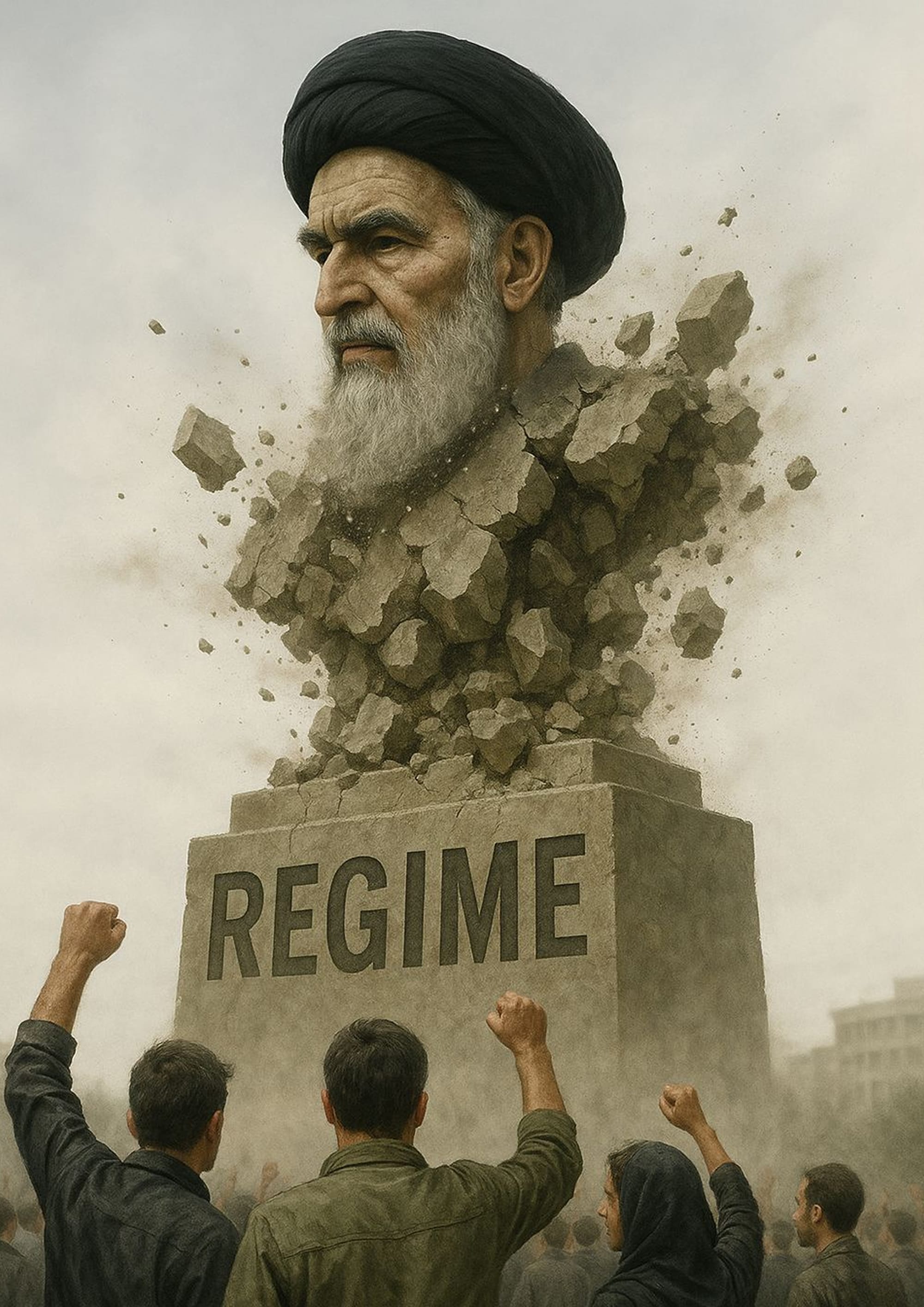
Struggling precariously between survival and collapse, the ruling mullahs’ regime in Iran is currently engulfed in severe instability. Internally, it faces intensifying crises that have galvanized widespread protests, with citizens increasingly demanding better living conditions, political rights, and essential freedoms. At the same time, the regime confronts substantial regional setbacks, notably the gradual unraveling of the so-called Axis of Resistance—an alliance Tehran has long leveraged to justify its persistent interference in neighboring countries’ affairs.
These interventions have actively contributed to the destabilization of the region, as Iran pursues its ambition to dominate at the expense of the security, stability, and well-being of surrounding nations. Amid these challenges, the return of President Donald Trump to the US presidency marked a turning point, as his administration adopted a more aggressive stance toward Iran’s regional activities and nuclear ambitions. This included significantly escalating sanctions that had been imposed by previous US administrations, further burdening Iran’s already fragile economy and deepening its internal difficulties.
Amid this situation, the Iranian regime is facing a crisis unlike any it has experienced since seizing power after the 1979 Iranian Revolution, which was led by the people against the Shah’s rule with demands for freedom and rights restoration. However, the revolution was hijacked by the hardline movement under the first Supreme Leader, Khomeini, who re-established a dictatorship with a religious character that controlled domestic affairs and inflamed networks of agents and supporters abroad through sectarian rhetoric. Now, nearly fifty years later, the current regime stands in the same position as its predecessor: dealing with internal unrest and demands, regional defeats and failures, and international conflicts and disputes. This places it in an existential crisis that forces it either to act by revising its policies or face the inevitable end experienced by many authoritarian regimes before it, whether disguised by religion or nationalism.
Considering these two possibilities, the report assesses the trajectory of the mullahs’ regime as it approaches potential collapse and presents the most significant scenarios for the future of the Iranian state post-collapse, structured along two primary axes:
First: The Fall of the Mullahs’ Rule in Iran, A Highly Probable Outcome:
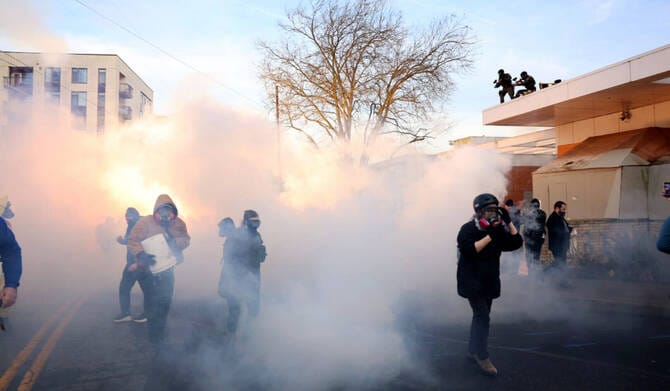
Amid Iran’s deepening political, economic, and social crises, public unrest continues to surge with every new event, much like the widespread reaction to the killing of Mahsa Amini—a tragedy still vivid in the nation’s collective memory. The large-scale protests that erupted domestically, alongside solidarity demonstrations by Iranians abroad, vehemently opposed the regime’s harsh policies and its security forces. These movements were notably marked by vocal condemnation of Supreme Leader Ali Khamenei . For instance, in 2019, students at Tehran’s Sharif University of Technology boldly chanted slogans such as “Khamenei is a pimp,” “Our shame is our incompetent leader,” and “Death to the dictator, whether Shah or Ayatollah,” reflecting deep-seated anger and rejection of authoritarian rule.
In this context, it is essential to mention a significant testimony concerning the Supreme Leader’s direct involvement in crushing the protests and the widespread arrests of dissidents, which escalated to the point of sentencing some to death. His sister, Badri Hosseini Khamenei—the mother of activist Farideh Moradkhani, who was recently arrested due to her critical positions regarding Khamenei and the protests—published a statement in which she renounced her brother and his authoritarian rule. She also announced that she had severed all ties with him. In her statement, she declared: “My brother does not listen to the voice of the people and continues the path of Khomeini, the founder of the Islamic Republic, in killing and suppressing innocent people.”
This situation is further severely aggravated by the pronounced contradiction and lack of harmony between the Iranian people and the values and rhetoric persistently propagated by the ruling regime, which stubbornly remain rooted in medieval notions. The regime consistently refuses to adapt to the ongoing social, political, and economic developments that are rapidly shaping modern societies. Consequently, the archaic political, economic, and social ideas promoted by the medieval theory of Wilayat al-Faqih no longer find acceptance or relevance among the Iranian population, who increasingly live according to more advanced concepts aligned with the spirit of human progress and civilization permeating most aspects of life.
This growing dissonance is vividly echoed in the slogans fervently chanted by Iranian protesters both domestically and internationally, demanding a democratic republic free from torture, killing, and oppression, and firmly rejecting dictatorship—whether cloaked in a crown or religious authority. Notably, some statistics indicate that protests and strikes have erupted across 152 cities within 30 provinces, predominantly triggered by worsening economic conditions. The acute shortages of electricity and natural gas have dramatically disrupted everyday life, forced the closure of schools and universities and led to widespread layoffs. This crisis is worsened by the regime’s reckless expenditure of over two trillion dollars on nuclear projects, of which only a small fraction—approximately 2%—has been used for electricity production.
Moreover, the regime faces intensified challenges due to the rising activism among ethnic minorities within the country. The Kurds, Baloch, and Ahwazis have increasingly and rightfully escalated their demands for the protection of their rights, guaranteed freedoms, and preservation of their cultural identities, resisting the regime’s attempts to forcibly impose control over their lives and internal affairs.
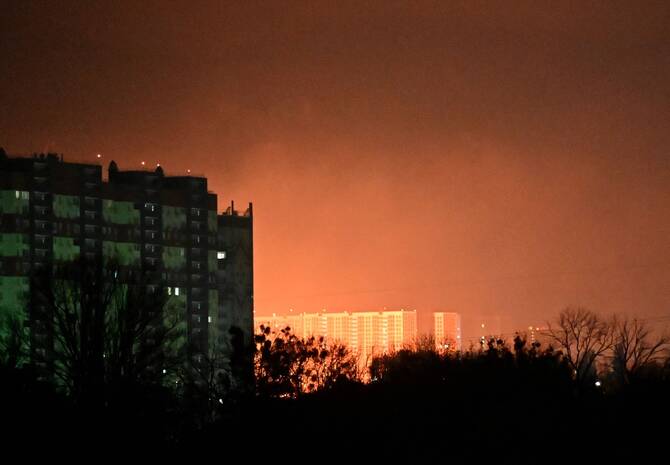
The challenges facing the mullahs’ regime extend well beyond Iran’s internal affairs. Since the events of October 7, 2023, the regime has suffered significant regional setbacks. It notably lost the factions it had backed in the Gaza Strip for over two decades. At the same time, Hezbollah experienced devastating blows, with the vast majority of its historic leadership—key figures behind its founding and rise over the last forty years—being eliminated. For the first time in the protracted Iran-Israel conflict, both sides exchanged direct military strikes; nevertheless, Iran failed to achieve effective deterrence. Meanwhile, Israel continues to prepare for further operations targeting Iranian assets, including its nuclear infrastructure. The fall of the Syrian regime occurred at a critically vulnerable moment for Iran, leaving it increasingly exposed to Israeli offensives. This collapse fragmented the so-called “Axis of Resistance,” eroding the core pillars that once upheld its regional influence and power.
Thereby, Iran crafted a regional policy rooted in the deliberate construction of a transnational network of agents and affiliated factions, extending across multiple countries in the Middle East and even reaching beyond the region. These groups operated under the direct authority of Tehran’s leadership and were closely managed through the Iranian Revolutionary Guard Corps (IRGC). Predominantly, these proxies took the form of sectarian political organizations—such as Hezbollah in Lebanon, the Houthi movement (Ansar Allah) in Yemen, various Palestinian factions, and Iraqi entities like the Dawa Party.
Among all these, Syria stood out as the only sovereign state fully drawn into Iran’s orbit—its regime functioning less as an independent government and more as a political instrument administering the country in alignment with Iranian strategic objectives. His downfall, therefore, marked a critical inflection point in Iran’s regional policy, particularly in light of Syria’s pivotal geostrategic position. That position had long allowed Tehran to establish and maintain a logistical and ideological bridge to its most loyal sectarian proxy, Hezbollah in Lebanon.
It also afforded Iran, through its operatives, a sustained presence in close proximity to Israel. Moreover, Syria played a central role in facilitating Iran’s influence by opening its military infrastructure to train members of various Arab groups aligned with Iranian interests—most notably, factions originating from Yemen.
Iran’s success over recent decades in establishing a vast network of agents has allowed it to exert significant regional influence by directly intervening in the domestic and foreign policies of numerous countries. However, Iran now finds itself in a precarious position following multiple defeats at the hands of Israel—ranging from targeted strikes to weakening its allied forces. The most significant blow was the fall of the Bashar al-Assad regime, which dealt a major shock to Tehran and exposed serious flaws in its long-term strategy of backing Assad. Iranian officials have openly admitted the heavy toll: Amir-Hossein Ghazizadeh Hashemi, head of the Iranian Martyrs Foundation, stated that Syria has cost Iran between $30 and $50 billion, alongside approximately 7,308 Iranian casualties. These sacrifices yielded no gains, forcing Iran to withdraw all military advisors and evacuate diplomats from its embassy in Damascus and consulate in Aleppo.
With the fall of Bashar al-Assad’s regime, Iranian losses effectively doubled, marking the failure of its strategy to establish direct military connections with Hezbollah, as the group would now face any direct confrontation with Israel alone. A similar pattern is unfolding in Iraq, where Iran’s allies are growing increasingly reluctant to align themselves fully with Tehran’s agenda due to fears of Israeli airstrikes and American sanctions. This hesitation is further compounded by the declining religious influence of Iran’s city of Qom and the revival of Karbala and Najaf in Iraq as the primary religious centers for Arab Shiites, largely because of the rising prominence of Shiite Grand Ayatollah Sistani and other Iraqi religious leaders.
This shift is clearly seen in the behavior of Iraqi militias, who showed reluctance to cross the Iraqi-Syrian border to assist the Syrian regime during the major offensive launched by Hay’at Tahrir al-Sham on November 27, 2024. Moreover, Iran’s calls to mobilize Arab Shiites have failed to gain traction; for instance, when Iraqi National Security Advisor Qasim al-Araji declared, “Zainab will not be taken captive twice,” intending to rally Arab Shiite fighters to defend the Syrian regime and Shiite holy sites in Syria, the response was notably weak.
In this context, it is important to highlight that calls have intensified within some local communities across the Arab world—particularly in the Gulf states—and are supported by certain local clerics, urging the establishment of an Arab religious authority (specifically a Gulf authority in its modern sense) to assume religious leadership. The goal is to ensure that religious authority originates from within the local community itself, especially in anticipation of potential changes that could arise following the eventual death of the Supreme Authority, Sayyid Ali al-Sistani, who is currently 94 years old.
The situation in Yemen, while somewhat different, reflects similar dynamics. Although the impact of Bashar al-Assad’s regime collapse is less pronounced on the Houthis in Yemen, a decrease in Iranian backing might encourage Yemeni groups opposed to the Houthis to revive their conflict and attempt to reclaim control over Yemen from the Houthis, paralleling the way the Syrian opposition challenged and weakened the Assad regime in Syria.
Despite all these internal and external challenges and setbacks, Iranian rhetoric continues to stress survival and steadfastness. For example, after the fall of Bashar al-Assad’s regime, Iranian Supreme Leader Ali Khamenei stated, “Iran is strong and will become stronger, and that the resistance will cover the entire region more than ever before.” This statement carries a clear message intended to rally and inspire the spirits of Iran’s followers and agents. However, this rhetoric also exposes the depth of Tehran’s internal crisis as it tries to consolidate its strength, reorganize its affairs, and reposition its regional and international agendas—particularly with the arrival of a new American administration led by Donald Trump.
Donald Trump is widely recognized as the one who unilaterally canceled the Iranian-American nuclear agreement, which had been signed during Barack Obama’s Democratic administration, before Trump’s first term in office. Currently, there is undeniably very little optimism surrounding the ongoing US-Iranian negotiations concerning Iran’s nuclear program, as the substantial risks it poses to regional security and stability make the likelihood of reaching a comprehensive agreement increasingly slim. As a result, these negotiations consistently and markedly intensify the economic, political, security, and even military pressures on the mullahs’ regime, drastically limiting its capacity to operate freely.
What must be emphasized is that the Iranian regime is presently enduring one of its most severe internal and external crises, with its range of possible actions sharply limited. This leaves Tehran with only two clear options:
First, it must accept a fundamental redrawing of its domestic policies by embracing a more open approach—granting expanded political and media freedoms, and reforming numerous economic and social policies aimed at reducing corruption and crime. Additionally, it needs to redefine its foreign policy on both regional and international levels by ceasing interference in the internal affairs of other nations, stopping the financing of terrorist organizations, establishing cooperative bilateral and collective relationships based on mutual respect, and halting its non-peaceful nuclear program that poses a threat to regional security and stability.
Second, it can continue its current stagnation, maintaining the same policies both domestically and in its relations with its regional neighbors and the wider world. This course will only exacerbate the regime’s crises, plunging it deeper into a destructive cycle of conflict with influential political forces and minority groups within its borders, as well as with regional and international actors abroad. Such a trajectory would mark the beginning of the first stage in the regime’s eventual downfall, thrusting the Iranian state into a prolonged phase of instability.
The truth is that the second option is by far the most probable, given the Iranian regime’s stubbornness and its leaders’ continued reliance on the same empty rhetoric that no longer serves any real purpose. This stance pushes Iranian forces, both domestically and abroad, to cooperate with regional and international parties who seek to capitalize on the backdrop of these developments and changes. Their goal is to work toward toppling the Iranian regime, viewing this as a more effective and less costly strategy for all involved, compared to launching a military strike on Iran’s nuclear capabilities and triggering a war—with all the significant risks such a conflict would pose to regional security and stability. Nevertheless, the fundamental problem remains: the search for a viable alternative regime.
Second: Iran Beyond the Mullahs’ Rule: Threats to the State’s Continuity
The question naturally emerges about the future shape of the Iranian state once the mullahs’ regime collapses. To address this, three possible scenarios can be examined:
The First Scenario, drawn from the experiences of some developing countries that have overthrown long-standing regimes similar to the mullahs’ rule—which has dominated power for nearly half a century—envisions the establishment of a military council led by figures from the Iranian Revolutionary Guard eager to enrich themselves after sacrificing some hardline clerics. They would attempt to initiate changes in the state’s structure by abolishing the hijab and granting some superficial forms of public freedoms. The realization of this scenario remains possible, especially given the Revolutionary Guard’s control over many key state institutions under Supreme Leader Ali Khamenei. However, this regime would likely not survive beyond five years, as the Revolutionary Guard’s leadership carries a dictatorial agenda and a closed-minded approach toward those who differ, whether inside Iran or abroad. The pragmatism they are currently trying to demonstrate will not succeed in the face of reverting to the same oppressive practices, which will have no practical space for implementation. At that point, the state would plunge into a postponed conflict between the new regime’s leadership and widespread societal and popular rejection of its continuation.
The Second Scenario involves the rise of the Iranian armed forces, which represent one of the main powers in the country’s balance, although they have not yet shown significant signs of breaking away from the regime. While they do not currently play a major role in Iran’s political life, their existence as a force capable of intervening in cases of state collapse cannot be ignored. Although this scenario is considered unlikely due to the lack of political experience and civil administration skills among the military leadership, its realization carries significant risks. It could trigger a conflict between the armed forces and the Revolutionary Guard, who both seek control, as well as clashes with minority groups demanding independence—such as the Kurds, Baluch, and Ahwazis. This would plunge the country into a brutal internal war, paving the way for its fragmentation.
The Third Scenario involves a shift to civilian rule through the establishment of a presidential council composed of numerous prominent Iranian experts, both inside the country and abroad, who possess credibility, integrity, and broad public support. This council would take charge of leading the nation during a transitional period aimed at restructuring the Iranian state internally and correcting many of the mistaken ideas that have dominated Iranian political discourse over the past five years. Although this scenario is the most positive and ideal for preserving Iran’s unity, its realization remains unlikely for three main reasons:
First, the Iranian military forces, including both the Revolutionary Guard and the regular armed forces, which hold significant power and weaponry, strongly oppose handing over control to a civilian body that would rearrange the country in ways that threaten their entrenched interests and gains.
Second, the council members themselves lack the necessary experience due to their unfamiliarity with the bureaucratic realities and political bargaining within Iran’s ruling institutions, which have been under clerical control for nearly half a century. More clearly, entrenched elements and leaders of the “deep state” within the administrative and executive branches will remain loyal to the mullahs’ ideology for some time, posing a substantial barrier to the reforms the transitional civilian government intends to implement. Furthermore, the council will face serious challenges not only in negotiating with the United States and the European Union but also in persuading Russia and China to resume cooperation, which will be far more difficult than anticipated.
Third, the very formation of the transitional presidential council—its political makeup, selection processes, and methods of governance and administration—poses challenges. Lessons from countries that experienced similar transitions after the fall of dictatorial regimes (such as Libya, Sudan, Somalia, Yemen, Syria, and Iraq) show that civilian governments formed in such circumstances frequently fail to navigate transitional crises effectively. This often drags the country into a brutal internal conflict characterized by a “war of all against all,” ultimately causing the state to fracture along regional, ethnic, religious, and sectarian lines. Iran could similarly be plunged into such chaos, risking complete disintegration.
Ultimately, what the mullahs’ regime has achieved over nearly half a century is the ruthless enforcement of power through a relentless policy of killing, exile, and imprisonment targeting anyone or any group daring to challenge them—ensuring that no alternative to their rule could emerge. Their entire methodology has been one of systematic destruction, crushing political, economic, social, and even religious life at every turn. The legacy they leave behind is stark: since 1979, Iran has become a nation burdened by deteriorating economic conditions, repeated political failures, multiple military defeats, and a cascade of moral, cultural, and religious setbacks. In the aftermath of the mullahs’ fall, Iran stands as a troubling new prototype of a failed state, poised to be one of the defining examples of instability and collapse in the world to come.
By: Dr. Ahmed Taher
Director of the Dialogue Center for Political and Media Studies.