Former Hezbollah leader: I now believe in secular democratic states
Excluding clerics and religious parties from the state’s executive, legislative, and judicial institutions is important if Arab and Islamic countries want to perform as well as their Western peers.

The secular democratic liberal state is the most successful system for safeguarding human rights and fostering extraordinary development that has transformed human life in all fields, almost akin to prophetic miracles.
This is my firm belief. Even though I am a Shi’ite jurist and religious scholar educated at the Qom seminary in Iran, I am also democratic, secular, and liberal, so it is natural to believe in the necessity of excluding clerics, religious scholars, and religious parties from the state’s legislative, judicial, and executive institutions.
They should neither be allowed to represent the people within these authorities, nor impose representatives on their behalf, nor be permitted to establish an exclusively religious political party, but religious figures can still take political stances: to side with the oppressed against the oppressor, to advocate transparency against corruption, virtue against vice, honesty against deceit, and integrity against theft.
Rejecting interference
Why do I reject their interference in the affairs of state institutions? Because when jurists, religious scholars, and religious parties gain power, that power quickly transforms into claws, fangs, and hooves that—under the name of God—ravage constitutions, laws, rights, development, construction, and democracy.
Their minds are filled with fatwas, concepts, and ideas that starkly contradict the clearest meanings of justice, political freedom, and intellectual liberty. The jurisprudence of these scholars is a form of darkness. They still believe in a terrifying division that negates any true sense of human justice.
They adhere to a jurisprudence they call “God’s law,” which divides humanity into believers and atheists, Muslims and non-Muslims, Sunni Muslims and Shi’ite Muslims, Ja‘fari Shi’a and Zaydi Shi’a, Hashemite Shi’a (descendants of the Prophet Muhammad’s family) and common Shi’a.
Pull Quote: When jurists, religious scholars, and religious parties gain power, that power quickly transforms into claws
This division leads to discrimination. For example, a Hashemite Shi’ite jurist wears a black turban, while a common Shi’ite jurist wears a white turban. According to fatwas issued by Shi’ite seminaries, Hashemite lineage is even granted biological privileges.
Many Shi’ite jurists are fully aware yet conceal it from humanity under the principle of taqiyya (concealing the truth for what they perceive as a greater benefit).
Some even believe in hostility toward Kurds, claiming that they are originally from the realm of the jinn (or ‘genies,’ supernatural beings in pre-Islamic Arabian religion). Jurists who hold such regressive beliefs cannot be entrusted with the leadership and management of a modern state.
Regressive ideologies
The root of the crises and disasters afflicting countries governed by jurists and religious leaders—Iran, the Houthis, Hezbollah, Hamas etc—lies in their regressive and despotic ideologies. The only salvation from this ignorance is the vessel of the modern, secular, and democratic state.
I firmly believe that, despite the blood that will be spilled, Muslim societies will benefit from justice, security, stability, development, reconstruction, and prosperity through the secular state, which can only be built by secular democratic parties—not religious parties or political Islam.
The secular democratic state embodies divine justice by removing the veil of religion from political authority. It must rely solely on competence, justice, transparency, respect for citizens’ rights, and defence of national security and sovereignty. As a result, its performance improves. Thieves, charlatans, despots, and tyrants (clerical or otherwise) who cling to power find no solace in secular democratic states.
The late Islamic thinker and writer Mustafa Mahmoud once said: “Do not deceive us with the false claim that there is no Islam without Islamic governance. This phrase may seem compassionate on the surface, but its essence is torment. Islam exists across the length and breadth of the earth, embodying the deepest faith without the need for such formal frameworks.”
Guardianship of reason
I was once among those who represented such reactionary ideas when I was Deputy Secretary-General of Hezbollah and as a scholar affiliated with one of the most renowned Shi’ite academic centres in Qom, Iran. As American writer Ernest Hemingway once said: “The foolish and the dead alone never change their opinions.”
I adhered to the theory of Wilayat al-Faqih (Guardianship of the Jurist), a Shi’ite concept denoting the absolute authority of the ruler, pushed by Ayatollah Ruhollah Khomeini in Iran after the 1979 Islamic Revolution, but fate and the mercy of the divine have led me—through various circumstances—to profoundly reconsider.
Pull Quote: ‘Do not deceive us with the false claim that there is no Islam without Islamic governance’ - the late Islamic thinker and writer Dr. Mustafa Mahmoud
I felt there was a disregard for the public’s intellect embodied in the Guardianship of the Jurist, so I embraced the concept of the Guardianship of Reason instead. The secular and modern democratic state is humanity’s greatest achievement, protecting human rights, freedom of thought and belief, and political freedom.
Hezbollah’s allegiance to Wilayat al-Faqih—especially prior to the fall of Secretary-General Hassan Nasrallah—constitutes an absolute attachment that conflicts with the Lebanese pledge, the Lebanese Charter, and the Lebanese Constitution. God commands us to uphold our pledges and mandates strict adherence to covenants. The Lebanese Constitution represents such a covenant and pledge; violating it is a grave betrayal of both God and the nation.
Legitimacy and performance
Relatives, friends, and even military leaders within Hezbollah ask me (either face-to-face or digitally) whether I support the bloc comprising the US, Europe, Israel, Saudi Arabia, and the UAE, or the opposing axis (Russia, China, Iran, and North Korea). If this is the choice, and if no third option exists, I stand with the American axis.
There are reasons behind my choice. When Iraqi Shi’ite jurists, leaders of Shi’ite parties in Iraq, and even Khomeini himself were political refugees, where did they live? The US and Europe (which they saw as vastly superior to Russia in every aspect of life). When they fall ill, where are they treated? The US and Europe. When they deposit their money, where are their banks? The US and Europe. When their children move abroad to study? The US and Europe.
Whether in terms of living conditions or other factors, the United States, Europe, and their allies are better (and it is human nature to be inclined towards the best). Moreover, I refuse to acknowledge the legitimacy of any state whose government is not democratic and secular. Russia’s idea of democracy is painfully flawed.
It contrasts sharply with the vibrant and inspiring democracies in places like the UK, Canada, Israel, Australia, Germany, Japan, France, Sweden, Norway, and Finland.
To deny that is to be wilfully blind.
__
By: Sheikh Hassan Saeed Mchaymich
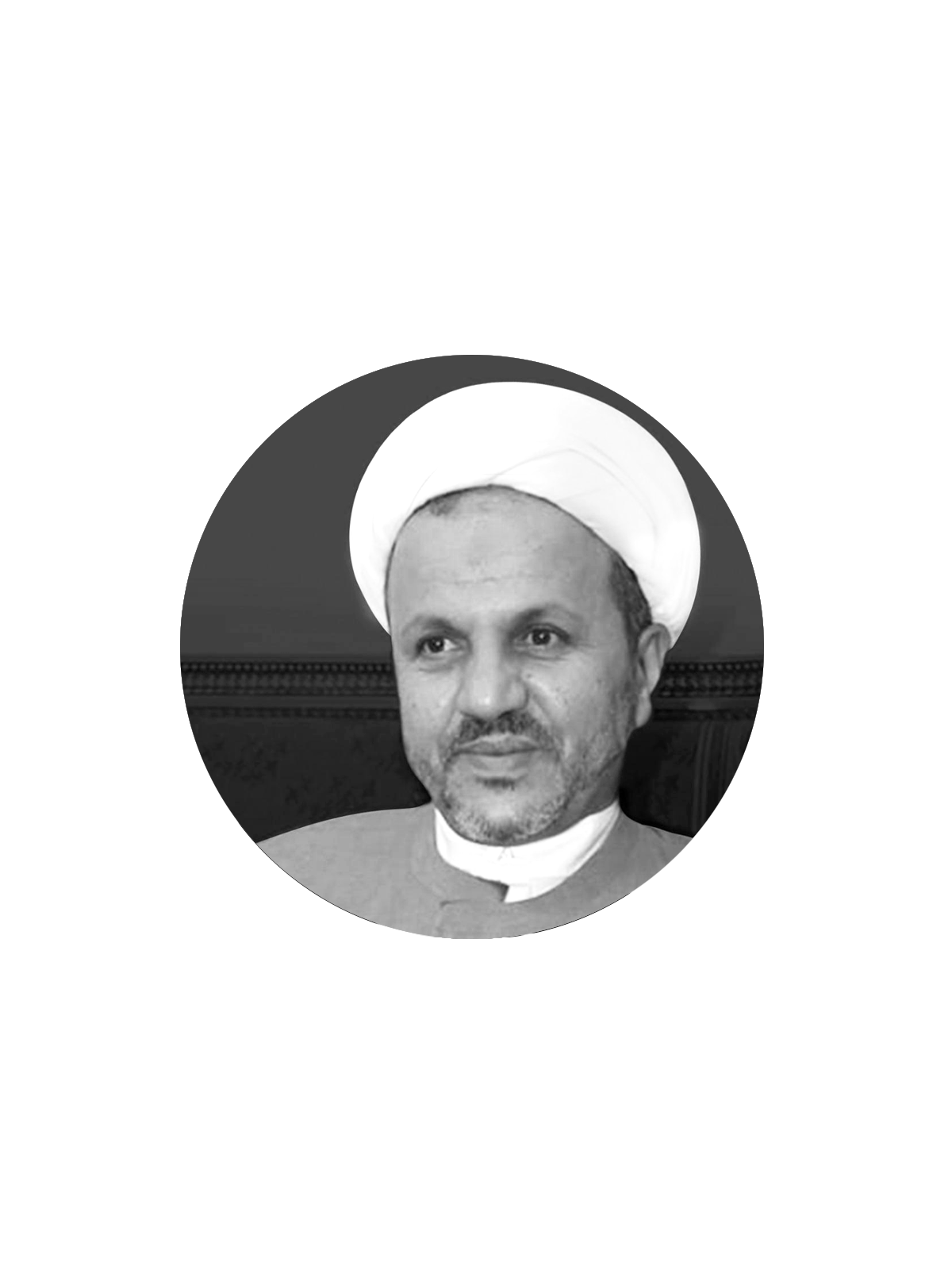
*Sheikh Hassan Saeed Mchaymich is the former Deputy Secretary-General of Hezbollah, a Lebanese dissident leader, and a Shi‘ite religious scholar educated at the Qom seminary in Iran.
**